masaimara.info
Menu
The Nairobi skyline over the open savannah of Nairobi National Park, May 2019.

HifadhiKenya Wildlife Service park, Nairobi

Nairobi National Park: fees, gates and a half-day plan

Nairobi National Park is 117 km² (45 sq mi) of savanna on the city's southern edge, by the Kenya Wildlife Service's measure, with four of the Big Five and no elephants. The gates open 6:00 to 18:00. A non-resident adult pays USD 80 per person per 24 hours, single entry on the KWS 2025 schedule, plus KES 600 (about USD 4.50) per vehicle per day for a car with fewer than six seats. You pay through KWSPay by M-Pesa, Visa or bank transfer; KWS lists no cash. A morning drive fits a free half-day before or after the Masai Mara, Kenya.
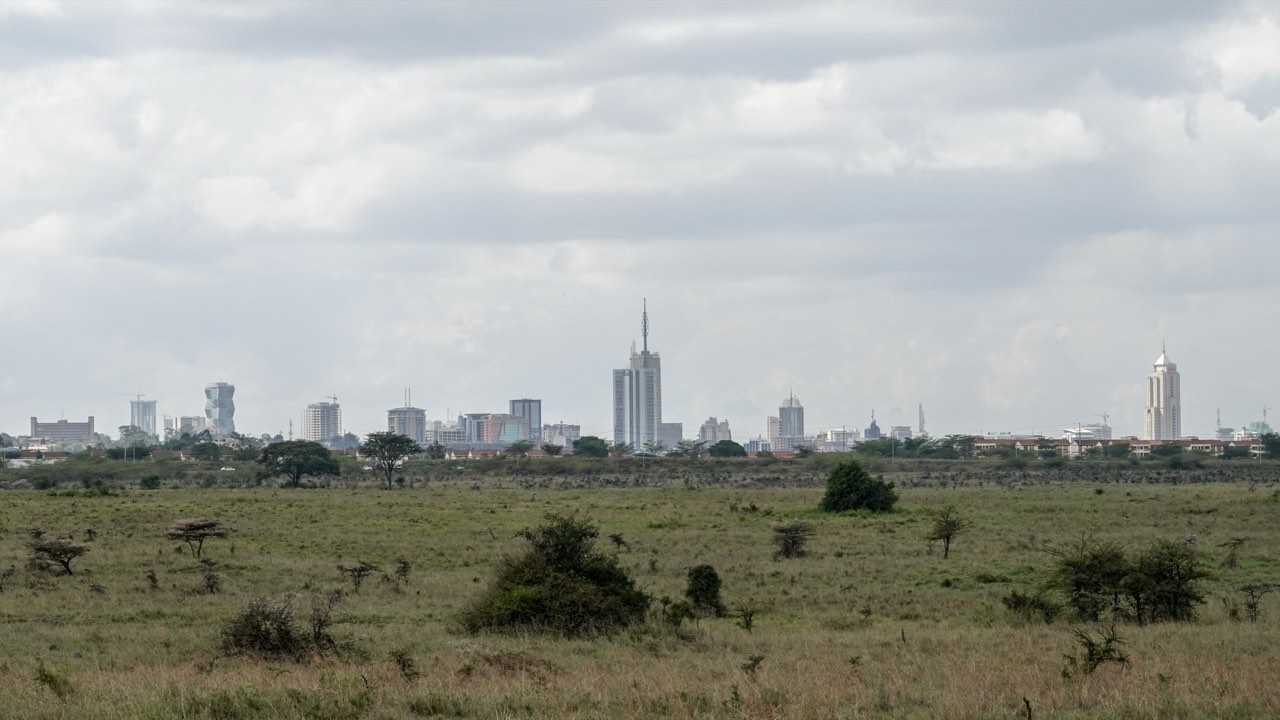
Photo: Timothy A. Gonsalves / Wikimedia Commons, CC BY-SA 4.0

Some links on this page are affiliate links: the guide earns a commission when you book through them. The partner sets the price; the guide adds no fee.

Gate bill, Nairobi National Park

What the gate will cost your group

Your gate bill

USD 160 for 2 adults, 24 hours, single entry, plus KES 600 (about USD 4.50) for the car (fewer than six seats)

Per person per 24 hours, single entry, one rate all year (KWS 2025 schedule). Paid through KWSPay: KWS lists M-Pesa, Visa and bank transfer, not cash. Children aged five and younger pay nothing, and so do tour drivers and guides registered by the Tourism Regulatory Authority.

Nairobi National Park: KWS conservation fees per person, single entryKenya Wildlife Service 2025 schedule; a daily fee is one access. Dollar figures for Kenya shillings at the Central Bank of Kenya rate.
WhoPark onlyNairobi PackageSanctuary Package (Orphanage and Safari Walk)
Non-resident adultUSD 80USD 105USD 40
Non-resident child 5 to 17 or studentUSD 40USD 55USD 20
African citizen adultUSD 40USD 55USD 25
African citizen child 5 to 17 or studentUSD 20USD 20USD 15
East African citizen adultKES 1,000 (about USD 8)KES 1,300 (about USD 10)KES 500 (about USD 4.00)
East African citizen child 5 to 17 or studentKES 500 (about USD 4.00)KES 700 (about USD 5)KES 300 (about USD 2.50)
Kenya resident adultKES 1,350 (about USD 10)KES 1,750 (about USD 13)KES 675 (about USD 5)
Kenya resident child 5 to 17 or studentKES 675 (about USD 5)KES 950 (about USD 7)KES 500 (about USD 4.00)
Vehicle, fewer than six seatsKES 600 (about USD 4.50) per vehicle per day
Vehicle, six to twelve seatsKES 1,500 (about USD 12) per vehicle per day

BeiReading the bill

Who pays which rate

The Kenya Wildlife Service charges by who you are, not by season: its 2025 sheet has one rate per category all year. The KWS fee buys a single access, valid up to 24 hours. A game drive and the Nursery hour inside one entry need one fee; if you leave the park between them and come back through a gate, Mbagathi Gate included, that is a second entry and a second fee.

USD 80Non-resident adult, park only

USD 105With the Animal Orphanage and Safari Walk

  • Non-resident: a national of any country other than an East African or African country. Most visitors from the US, Europe and Asia.
  • African citizen: a national of an African country outside East Africa, on its own USD rate, USD 40 per adult here.
  • East African citizen: a citizen of the East African Community, KES 1,000 (about USD 8) per adult.
  • Kenya resident: living in Kenya with a valid resident permit, other than Kenyan and East African citizens, KES 1,350 (about USD 10) per adult.
  • Child or student: a child is aged 5 to under 18; a student up to 23 on an organized visit from a school, college or university pays the child rate too. That differs from the Mara, where the child rate starts at 9.
  • Free: Kenyan citizens aged 70 and older, persons with disability, children aged five and younger, and tour drivers and guides registered by the Tourism Regulatory Authority.

Bring ID to the gate: a passport for non-residents and East African citizens, a resident permit for residents. The rates are set by Legal Notice No. 160 of 2025, which fixes USD 80 for a non-resident adult in Nairobi; the KWS fee sheet carries the same figures. The fee schedules as tables: open data.

SafariHalf-day drives from town

Tours from the city, plus the gate

Every half-day drive listed here leaves the park fee out: add USD 80 per non-resident adult to the tour price. On a package tour KWS expects the operator to include the fees; self-organized visitors pay on KWSPay.

WanyamaWhat lives in the park

Lions, rhinos and the city skyline

Gazetted in 1946, Nairobi National Park was Kenya's first national park. It lies about 8 km (5 mi) by road from the Central Business District along Lang'ata Road, past the Langata Army Barracks, as KWS gives the directions. KWS counts over 100 animal species and more than 400 bird species, and names three lion prides: Kingfisher, Athi and Mokoyet. Sightings are never certain; a drive is a search.

Of the Big Five, elephants are the one missing. The orphaned elephants at the Sheldrick Nursery live inside the park, but you see them only in its public hour; the Sheldrick Nursery visit explains the booking.

  • Rhino sanctuary

    KWS lists a rhino sanctuary among the park's attractions, with the historic ivory burning site and picnic and event sites.

  • USD 25

    Animal Orphanage

    Rescues and rehabilitates orphaned, injured, aged and abandoned wildlife. Non-resident adult, child USD 15.

  • USD 25

    Safari Walk

    A raised wooden boardwalk through wetland, savanna and forest habitats. Both for USD 40 as the Sanctuary Package.

  • Kifaru Ark Shop

    Park maps, guide books and gifts at the Main Gate on Langata Road.

Zebra and the Nairobi skyline
A plains zebra in Nairobi National Park with the city skyline behind it, August 2025.Photo: Addshore / Wikimedia Commons, CC BY-SA 4.0
Giraffe in Nairobi National Park, city behind
A giraffe in Nairobi National Park with the Nairobi skyline behind it, June 2020.Photo: Alexmbogo / Wikimedia Commons, CC BY-SA 4.0

LangoGates 6:00 to 18:00

A half-day plan around the fixed hours

Two half-days fit most travelers. They come from the planner on the Nairobi page, which places the drive in the longest stretch the other fixed hours leave free. The plan gives the order and the clock; ask your driver how long each leg takes on the road.

Morning: the drive, then the orphans and the giraffes

  1. Game drive 6:00 to 10:30, from the gate opening at 6:00.
  2. Sheldrick Nursery 10:30 to 12:00: at Mbagathi Gate on Magadi Road by 10:30, the public hour 11:00 to 12:00, booked ahead with the Trust.
  3. Giraffe Centre 13:00 to 15:00, after its weekday busy hours; the Giraffe Centre is open 9:00 to 17:00.

Afternoon: in from town, out by the gate's close

  1. Giraffe Centre 13:00 to 15:00
  2. Game drive 15:00 to 18:00, out before the gates close at 18:00.

Since 19 September 2023 KWS requires Nursery visitors to pay the park entry fee on top of the Trust's donation of USD 20. The KWS fee buys a single access, valid up to 24 hours. A game drive and the Nursery hour inside one entry need one fee; if you leave the park between them and come back through a gate, Mbagathi Gate included, that is a second entry and a second fee. Taxis: the Trust says a taxi drops you at the KWS gate unless park fees for the driver and vehicle are paid.

Giraffe at the Giraffe Centre

Photo: Laika ac / Wikimedia Commons, CC BY-SA 2.0

TwigaGiraffe Centre, Lang'ata

The Giraffe Centre, open 9:00 to 17:00, pairs with a morning in the park.

GariVehicle charge and payment

The vehicle charge and how to pay

KES 600 (about USD 4.50)Fewer than six seats, per day

KES 1,500 (about USD 12)six to twelve seats, per day

The vehicle pays its own charge per day on top of the people inside it; tour drivers and guides registered by the Tourism Regulatory Authority pay no conservation fee. Whether a day tour's price covers its vehicle charge is the operator's to say, which is why the calculator lets you leave the vehicle off your bill.

KWS lists M-Pesa, Visa and direct bank transfer through Kenya Commercial Bank, ABSA or Equity Bank, not cash. Self-organized visitors pay ahead on KWSPay. KES amounts on this page convert at KES 129.96 per US dollar, the Central Bank of Kenya rate posted 12 November 2026.

The same single-entry rule applies in the other KWS parks on a Mara route, at their own rates: Amboseli National Park and Lake Nakuru National Park. The Masai Mara works differently, by the day from 6:00 to 18:00 and by season; see the Masai Mara entrance fee.

SheriaKenya Wildlife Service rules

Park rules on a self-drive

  • Speed

    40 km/h (25 mph)

    The KWS limit in its parks; speeding attracts penalties.

  • Stay in the car

    Stay in your vehicle except in designated areas and keep the doors closed.

  • On the tracks

    Off-road driving is prohibited; stay on established roads and trails.

  • Distance

    20 m (66 ft)

    The minimum distance KWS sets for viewing wildlife.

  • No feeding

    Feeding wildlife is prohibited. Single-use plastic is banned in the parks.

  • Gate hours

    6:00 to 18:00

    Unless you stay overnight in the park.

Orphaned elephant calf drinking
An orphaned elephant calf drinking at the Sheldrick Elephant Orphanage in Nairobi, February 2019.Photo: Sara Ahmed Naqvi / Wikimedia Commons, CC BY-SA 4.0

MaswaliPark questions

Questions

Official pages: the KWS Nairobi National Park page, the KWS FAQs, the KWS fee sheet, the Sheldrick Nursery visit and the Giraffe Centre FAQs. Getting on to the Mara from here: Nairobi to Masai Mara.

Is it worth visiting Nairobi National Park?

For a spare half-day, it is the closest savanna to the city: 117 km² (45 sq mi) with four of the Big Five by KWS's count and the skyline behind them. A morning drive from 6:00 still leaves the Sheldrick Nursery hour at 11:00. A non-resident adult pays USD 80 per person per 24 hours, single entry.

How much is the Nairobi National Park entrance fee?

On the KWS 2025 schedule a non-resident adult pays USD 80 per person per 24 hours, single entry, a child or student USD 40. The Nairobi Package adds the Animal Orphanage and Safari Walk for USD 105. A car with fewer than six seats pays KES 600 (about USD 4.50) per vehicle per day.

Can you pay cash at Nairobi National Park?

KWS lists no cash. It takes M-Pesa, Visa and direct bank transfer through Kenya Commercial Bank, ABSA or Equity Bank. Self-organized visitors pay on KWSPay before they arrive; on a package tour, KWS says, the operator includes the fees. The Sheldrick Nursery's own donation is the exception: cash on the day.

Are there elephants in Nairobi National Park?

Not wild ones. KWS states the park has four of the Big Five, with no elephants. The orphaned elephant calves of the Sheldrick Wildlife Trust live at its Nursery inside the park and can be seen in the public hour, 11:00 to 12:00, booked ahead with the Trust, with the park fee on top.

What time does Nairobi National Park open?

The gates open at 6:00 and close at 18:00, unless you stay overnight in the park. The fee covers a single entry valid up to 24 hours, so a drive from opening to closing is one ticket. The Nursery visitors' gate, Mbagathi Gate on Magadi Road, expects them by 10:30.

Sources

  1. Viator listing 'Nairobi National Park Half-Day Tour; Free Wi-Fi connection' (operator not shown on the page), read 12 November 2026: listed price from USD 38 per person, half-day (4 to 8 hours) from Nairobi, max 15 travelers, park fees excluded. Viator: Nairobi National Park Half-Day Tour; Free Wi-Fi connection, 2026-11-12.
  2. Viator listing 'Safari Tour; Nairobi National Park' (operator not shown on the page), read 12 November 2026: listed price from USD 37 per person, half-day (4 to 8 hours) from Nairobi, max 15 travelers, park fees excluded. Viator: Safari Tour; Nairobi National Park, 2026-11-12.
  3. Sheldrick Wildlife Trust minimum entry donation for the 11am Nursery visit, adult aged 12 and above (non-resident): US$20 per person or the Kenya shilling equivalent at the day's rate. Sheldrick Wildlife Trust: Nairobi Nursery Visiting.
  4. Park, camping, vehicle and balloon fees. Narok County 2025/26 Park Fees & Charges and Narok County Finance Act 2023 (reserve, Narok side); Mara Conservancy conservation fees (Mara Triangle); Kenya Wildlife Service Conservation Fees 2025 (Nairobi, Amboseli, Lake Nakuru); Enonkishu Conservancy fee page
  5. Unit conversions. Metric figures with US equivalents (1 km = 0.621371 mi, 1 m = 3.28084 ft, 1 kg = 2.20462 lb, 1 ft = 0.3048 m, 1 acre = 0.404686 ha, °F = °C × 9/5 + 32)
  6. Travel times and distances. Drive times as stated by Mara North Conservancy, Mara Siana Conservancy, the Mara Conservancy, Safarilink and AirKenya; road distances from KeNHA, Narok County, Kenya Wildlife Service and Mara Siana Conservancy; flight times from the 2026 timetables of Safarilink, AirKenya, Governors' Aviation and Mombasa Air Safari
  7. Hours on the ground by plan, and the Nairobi half-day planner. Computed from the Mara Conservancy ticket portal (ticket 6:00 to 18:00, checkout 10:00), the reserve management plan (no entry after 18:30, in camp by 19:00), the drive time Mara North Conservancy states, the Safarilink and AirKenya 2026 timetables, the check-in times Safarilink, AirKenya and Governors' Aviation state at Wilson and the transfer times Safarilink and AirKenya state; the departure time from Nairobi is a scenario
  8. Exchange rate. Central Bank of Kenya, daily indicative exchange rate posted 12 November 2026 (average of major market participants' buying and selling rates at the open of trade)