HifadhiWest of the Mara River
Mara Triangle: gates, fees, camps and rules
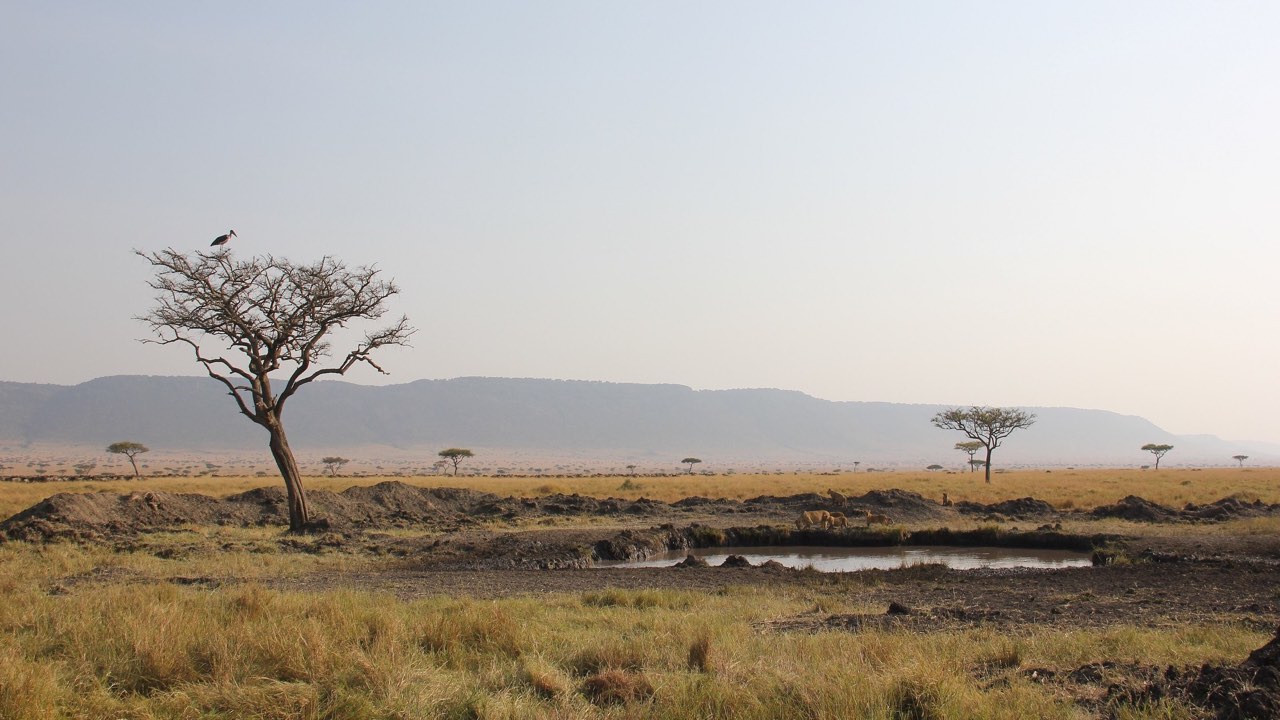
The Mara Triangle is the part of Masai Mara, Kenya, west of the Mara River: the western section of the Maasai Mara National Reserve, 510 km² (197 sq mi) between the Oloololo escarpment, the river and the Tanzania border, run by the Mara Conservancy since June 2001. Its park fee is the Narok side's: USD 100 per person per day for a non-resident adult from 1 January to 30 June, USD 200 from 1 July to 31 December, valid 6:00 to 18:00 on the day and paid by card or M-Pesa, never in cash.
Photo: Laika ac / Wikimedia Commons, CC BY-SA 2.0

Only two places to sleep stand inside it, and 15 camps outside use it for their game drives. So for most visitors the choice is not where to sleep but which gate and road to use, and what the Triangle's rules change: you stay in the vehicle except at picnic trees, keep more than 25 m (82 ft) from animals, and are out of the park or back in camp by 19:00.
Some links on this page are affiliate links: the guide earns a commission when you book through them. The partner sets the price; the guide adds no fee.
RamaniGates, campsites, beds
The Triangle, drawn
The escarpment closes the north-west, the river the east, the border the south. Switch the layers to see the ways in, the campsites and the one lodge with a mapped position; the lists below the drawing hold every place, mapped or not. For the whole Mara with its airstrips, see the Masai Mara map.
Show on the drawing
Ways in
- Oloololo Gate Road gate in the north. Fees paid here.On the drawing
- Purungat Bridge Gate Road gate at the bridge over the Mara River, the way in from the Narok side. Fees paid here.On the drawing, at the bridge
- Mara Serena Airstrip The air entry. Fees paid here.On the drawing
- Little Governors' barrier Road barrier.Not drawn: no published position
- Angama barrier Road barrier; the ticket portal lists it as Angama Gate.Not drawn: no published position
- Kilo Two barrier Road barrier.Not drawn: no published position
Places to sleep inside
- Mara Serena Safari LodgeOn the drawing
- Little Governors' CampNot drawn: no published position
These are the only two, as the Mara Conservancy lists them. It names 15 camps outside whose guests drive in and pay the Triangle's fee: Ahadi Mara Camp, Angama Mara Lodge, Bateleur Camp, Kichwa Tembo Camp, Jacaranda Bush Camp, Kilima Camp, Mara Elatia Camp, Mara Engai, Mara Pure, Mara Siria, Mara Sun Lodge, Mara West, Nyota Mara Lodge, Pearl Mara Expedition, Sanctuary Olonana.
Campsites
| Campsite | Kind | Largest group | On the drawing |
|---|---|---|---|
| Oloololo | public | 30 | drawn (OpenStreetMap) |
| Iseiya | public | 10 | drawn (OpenStreetMap) |
| Eluai | public | 15 | drawn (OpenStreetMap) |
| Dirisha | private | 20 | drawn (Mara Conservancy position) |
| Enkishui | private | not listed | no published position |
| Kiboko | private | 30 | drawn (Mara Conservancy position) |
| Hornbill | private | 15 | drawn (Mara Conservancy position) |
| Ndovu | private | 30 | drawn (Mara Conservancy position) |
| Olarro | private | 12 | drawn (Mara Conservancy position) |
| Ratpanat | private | not listed | no published position |
| Kampi ya Mungu | special private | 40 | no published position |
| Kishangaa | special private | 30 | no published position |
| Kijito | special private | 20 | no published position |
Group sizes are the ones the Conservancy's booking system lists; it spells one special site Kishanga.
Zones in the Triangle
The reserve's management plan 2023 to 2032 gives each zone's area, not its outline, so the zones are bars here, not shapes on the drawing.
River crossings
No crossing point is drawn: none has a published position. The plan proposes a viewing platform with parking on the Triangle side of the Serena Crossing.
KambiInside or outside
Sleep inside, or drive in?
2places to sleep inside the Triangle
15camps outside whose guests use it
Inside the Triangle you can sleep at Mara Serena Safari Lodge or at Little Governors' Camp. The Mara Conservancy names no others, owns no camp and takes no bookings. The 19:00 rule binds guests inside too: by then everyone is out of the park or in their camp or lodge.
Most visitors sleep outside, at one of the 15 camps and lodges the Conservancy lists, among them Angama Mara Lodge, Kichwa Tembo Camp, Bateleur Camp and Mara West. Their guests drive in for game drives and pay the Triangle's fee. The full list is under the drawing; where to stay in the Masai Mara compares the areas, and Masai Mara hotels sorts the camps by price.
One camp on that list, Pearl Mara on Booking.com, listed a total of USD 1,900 for two adults and two nights from 14 to 16 February 2027, and USD 2,600 for 10 to 12 August 2027, taxes and fees included (read 12 November 2026). The listing places it in the Masai Mara without naming a side, and does not say whether park fees are included.
The fee follows where you sleep. A guest of a camp in the Triangle who drives in through Sekenani Gate on the Narok side pays nothing until entering the Triangle at Purungat Bridge. Check what your camp's rate covers before you pay at a gate.


Photo: Ninara / Wikimedia Commons, CC BY 2.0

LangoOloololo Gate, Mara Triangle
Gates open at 6:00 and close at 19:00. No vehicle enters after 18:30.
BarabaraRoads and flights
Which gate, which road
The Mara Conservancy names three road routes. Which one is fastest depends on where you sleep (driving to the Mara Triangle).
-
Via Sekenani and Keekorok
Tarmac from Narok to Sekenani Gate, then across the Narok side via Keekorok to Purungat Bridge. The Conservancy calls it the fastest way for Mara Serena guests. Nairobi to Masai Mara has the road times to Sekenani.
-
Via Aitong to Oloololo Gate
Through Aitong and Mara North Conservancy to Oloololo Gate, the fastest way for the camps just outside, such as Angama, Kichwa Tembo and Bateleur. The conservancies page covers Mara North's own rules.
-
From Kisii down the escarpment
From Kisii via Kilgoris and Lolgorian, down the Siria escarpment to Oloololo Gate.
From Oloololo Gate to Purungat Bridge Gate takes a little over 1 hour by road at 50 km/h on the Triangle main road, as the Conservancy states it. The limit is 50 km/h on graded roads and 30 km/h on every other track, and automated speed cameras watch various roads. Any four-wheel-drive vehicle will do, the Conservancy says; fuel is sold only at camp and lodge stations and sometimes runs short.
A vehicle pays its own fee: KES 1,000 (about USD 8) per vehicle per day under six seats and KES 1,500 (about USD 12) for 6 to 12 seats. It is valid for 12 hours with unlimited exits and re-entries, and a vehicle crossing the Triangle to somewhere else gets two hours before fees apply.
By air, the way in is Mara Serena Airstrip. From Nairobi's Wilson Airport the Mara's airstrips are 30 minutes to 1 hour by scheduled flight, by the airlines' 2026 timetables; Nairobi to Masai Mara flights has the times. The Conservancy's own flying page, which carries no date, names AirKenya, Safarilink, Fly540, Mombasa Air Services, Aeronav and Boskovic Air Charters (flying to the Mara Triangle); treat that as a list of names, not a timetable.
No boundary of the Triangle is fenced. Closed tracks are blocked with rocks or logs laid across them, and white beacons mark the Tanzania border. The beacons are a line you do not cross: the fine is below.
TiketiPark fee and payment
One ticket, paid where you sleep
The Mara Conservancy charges the same fee as the Narok side, whether you are accommodated inside or outside the park. In full: USD 200 per person per day, non-resident adult, 1 July to 31 December (Mara Conservancy rates, listed 12 November 2026); valid 6:00 to 18:00 on the day. It does not carry over to the next morning, whatever time you enter.
Pay by M-Pesa or credit card; the Triangle takes no cash. You can buy tickets online from KAPS, the appointed collector, with a Visa card, or on arrival from an authorized KAPS employee at Purungat Bridge, Oloololo Gate or Serena Airstrip. The KAPS portal also takes a KAPS float account, counts your days in the park from the dates you give and asks where you will sleep (KAPS ticket portal, rate card).
Resident and citizen rates need a passport, a National ID or, for citizen children, a birth certificate. A driver's license is not accepted, and without the right ID you pay the non-resident rate. The entrance fee page counts your ticket days for a whole stay.
USD 100Non-resident adult, 1 January to 30 June
USD 200Non-resident adult, 1 July to 31 December
USD 50Child 9 to 17, or student in an organized group, all year
freeChild aged 0 to 8, all year
Per person per day, valid 6:00 to 18:00 on the day; Mara Conservancy rates, listed 12 November 2026. A balloon landing in the Triangle adds USD 80 per adult per landing and USD 35 per child per landing (hot air balloon).
By its OpenStreetMap position, Kichwa Tembo airstrip, which the reserve's management plan also lists as an air entry point, lies in the Triangle too; fees are paid at Purungat Bridge, Oloololo Gate or Serena Airstrip.
Where the money goes: 55% of the Triangle's fee revenue goes to Narok County Government, and the Conservancy and KAPS share the rest (partnership with the local authority).

Photo: Daniel Case / Wikimedia Commons, CC BY-SA 4.0

SheriaMara Triangle park rules
Stay more than 25 m (82 ft) from animals, and inside the vehicle.
SheriaRules and fines
Rules west of the river, with their fines
Rangers fine on the spot. Most offences cost KES 10,000 (about USD 77) on the Mara Conservancy's fines chart, dated 2019 (park rules).
-
Stay in the vehicle
Getting out is an offence except at picnic trees. Fine KES 10,000 (about USD 77).
-
Off-road by zone
No off-road driving in the High Use Zone or the River Zone. In the Low Use Zone you may leave the road only to approach lion, leopard or cheetah, to 25 m (82 ft), and return the way you came. Fine KES 10,000 (about USD 77).
-
Distance and crowding
Keep more than 25 m from animals. No more than 5 vehicles at a sighting; with more waiting, each gets 10 minutes and the rest wait 100 m (328 ft) back. Fine KES 10,000 (about USD 77) each.
-
Speed limits
50 km/h on graded roads, 30 km/h on other tracks, with speed cameras. Speeding, or not slowing for animals, costs KES 10,000 (about USD 77).
-
Quiet, seated, tidy
No shouting, clapping or cheering, no sitting or standing on the roof, no chasing animals, no litter. KES 10,000 (about USD 77); littering KES 500 (about USD 4.00).
-
The border is closed to you
Crossing the Tanzania border is not allowed, and is fined KES 10,000 (about USD 77). No ticket, or an invalid one: the full park fee plus KES 10,000 (about USD 77).
Fines are paid at the rangers' office before you leave, against a receipt. Rangers can also remove a vehicle or a person, and an unpaid fine can bring a ban of up to six months, depending on the offence.
On the Narok side the reserve's management plan sets the same hours, no entry after 18:30 and out or back in camp by 19:00, and the same crossing rule (management plan). At a sighting the plan moves vehicles on after 15 minutes when others wait; the Mara Conservancy's own rules set 10 minutes in the Triangle when more than five vehicles wait. The national reserve page has its zones and rules; the conservancies outside the reserve set their own.
Mto MaraThe Mara River, Mara Triangle
The river and the crossings
The Mara River is the Triangle's whole eastern edge. At a crossing point you may not get out of the vehicle, and while the herds move you may not block a crossing by parking too close or drive through them. In 2008 a Conservancy workshop recommended no more than 10 vehicles at the Serena crossing and 20 at the crossing points near Mara Bridge: a recommendation, not a rule.
The Conservancy's own monthly reports show how the herds' use of the Triangle has changed. In May 2024 it wrote that there had been no wildebeest crossings at the main crossing above Serena for four years. In April 2024 it expected the migration to keep crossing in Tanzania and to come into the Triangle through the Lemai Wedge, the Tanzanian strip west of the river that it patrols jointly.
In a big year the numbers are large: the Conservancy estimated about half a million wildebeest in the Triangle by mid-August 2009 and close to a million for a short period in August 2017 (August 2017 report). Across the whole Mara, large herds were recorded in August in 26 of 26 seasons. No crossing can be booked for a day or a week; the migration page has the season counts, and the best time to visit sets them against rain and prices.


KambiCampsites, Mara Triangle
Camping in the Triangle
Camping costs USD 40 per person per day for a non-resident adult and USD 20 per person per day for a child 9 to 17 or a student, on top of the park fee. Every camp party must hire two rangers for night security; they are driven to and from the site, and you need not feed or house them. Book through the Mara Conservancy's campsite booking system.
-
Oloololo
- Public
- Hot showers
A kitchen shelter without utensils, toilets for ladies, gents and people with disabilities, and hot showers. In the north, near Oloololo Gate.
-
Iseiya
- Public
- Long-drop toilet
Only a long-drop toilet. Mara Serena lodge is close, and its canteen sells food and drinking water.
-
Eluai
- Public
- Bring water and firewood
Long-drop toilets and a bathroom. Bring your own gear, water and firewood.
The public sites take no booking fee, set no maximum stay and charge nothing to cancel. They work first come, first served, and no gear is provided.
A private site (seven, from Dirisha to Ratpanat) costs a non-refundable KES 50,000 (about USD 385) per booking for a professional operator, for up to 14 days, and KES 15,000 (about USD 115) for a private party, for up to 7 days. The three special sites are for professional operators only, at USD 1,000 a day, non-refundable, and the booking system shows them open only from July to October. Cancelling a private or special booking costs USD 1,000.
HifadhiWho runs it
Who runs the Triangle
Management was split between the Narok and Trans Mara county councils in 1994: the eastern side under Narok, the north-western sector, the Mara Triangle, under Trans Mara (Mara Conservancy; the reserve's management plan gives 1995). The Mara Conservancy began work in the Triangle on 12 June 2001. The two councils later merged into Narok County Government, which inherited the agreement; the reserve and the Triangle are both in Narok County. The Conservancy, a not-for-profit company, has run the Triangle ever since, from 2016 under a ten-year agreement with Narok County Government (its history).
Its mandate covers collecting and sharing out the revenue, security, tourism and roads and other infrastructure; KAPS is the appointed revenue collector. Because it borders Tanzania, the Conservancy calls the Triangle the first line of defense against poachers (anti-poaching). It states that its revenue peaks from June to September and falls sharply from February to May.
Is it quieter? The reserve's management plan puts an ideal load at about 1 to 1.2 visitors per km², which it says is close to the high-season density in the Triangle, against a possible 2 to 2.5 per km² in the central Narok side in high season. That is the plan's figure, not a count on the day you go. For medical help, the Conservancy lists clinics at Angama Mara Lodge, Kichwa Tembo Camp and Mara Serena Lodge, and states that an AMREF Flying Doctors evacuation can cost a non-member up to USD 5,000; it recommends membership (emergency page).


MaswaliMara Triangle questions
Mara Triangle questions
The Mara Conservancy publishes its conservation fees, camps and lodges and an overview of the Triangle. Masai Mara vs Serengeti compares the two sides of the border.
Is the Mara Triangle part of the Masai Mara?
Yes. It is the western part of the Maasai Mara National Reserve, west of the Mara River, 510 km² by the Mara Conservancy's figure. The Conservancy, a not-for-profit company, runs it for Narok County. The larger part east of the river, the Narok side, is run by the county itself. The conservancies outside the reserve are separate land with their own fees.
Do I need a separate ticket for the Mara Triangle?
You pay where you sleep. Guests of the camps outside, such as Pearl Mara, pay the Triangle's fee when they drive in. A guest of a Triangle camp who drives in through Sekenani Gate pays nothing until Purungat Bridge. The rate is the Narok side's: USD 200 per non-resident adult per day from 1 July to 31 December, USD 100 from 1 January to 30 June, by card or M-Pesa, valid 6:00 to 18:00 on the day.
Can I camp in the Mara Triangle?
Yes, at three public sites, Oloololo, Iseiya and Eluai, first come, first served with no booking fee, or at private sites booked through the Conservancy. Camping costs USD 40 per person per day for a non-resident adult on top of the park fee, and every party hires two rangers for night security. Bring your own gear; only Oloololo has hot showers.
Can I get out of the vehicle in the Mara Triangle?
Only at picnic trees. Getting out anywhere else is an offence, fined KES 10,000 (about USD 77) on the spot under the Mara Conservancy's fines chart of 2019. You may not get out at river crossings either, sit or stand on the roof, or come closer than 25 m to animals.
Is the Mara Triangle quieter than the Narok side?
The reserve's management plan says the Triangle's high-season density is about 1 to 1.2 visitors per km², against a possible 2 to 2.5 in the central Narok side. Only two places to sleep stand inside, and the Triangle's sighting rule allows 5 vehicles at once. Neither figure is a count of vehicles on a given day.
Sources
- Mara Conservancy: the Mara Triangle is bounded by the Oloololo Escarpment, the Mara River and the international (Kenya-Tanzania) boundary, which form its triangular shape. Mara Conservancy: Experience Mara Triangle page.
- Mara Conservancy: in 1994 management of the reserve was divided into the eastern side (Narok County Council) and the north-western sector, the Mara Triangle (Trans Mara County Council); the Mara Conservancy began operations in the Triangle on 12 June 2001; with the new constitution the Narok County Council and Trans Mara County Council merged to form the Narok County Government, which inherited the management agreement, and another ten-year agreement was signed in 2016. Mara Conservancy: Our History page.
- Mara Conservancy history: the Narok County Council and Trans Mara County Council merged to form the Narok County Government, which inherited the Triangle management agreement; both the reserve and the Triangle are in Narok County. Mara Conservancy: Our History page.
- Mara Conservancy: the Mara Triangle is the first line of defense against poachers because of its proximity to the Tanzanian border; the Lemai Wedge is the Tanzanian strip west of the Mara River patrolled jointly. Mara Conservancy: Anti-poaching page.
- Booking.com listing 'Pearl Mara' (Masai Mara, as Booking states the area; not stated on card; board basis shown: none shown; 40 reviews, score 9.1), read 12 November 2026: total USD 1900 for 2 adults, 2 nights, 14 to 16 February 2027, taxes and fees included; a members-only price of USD 1710 is shown after sign-in. Booking.com: Pearl Mara, 2026-11-12.
- Booking.com listing 'Pearl Mara' (Masai Mara, as Booking states the area; board basis shown: none shown; 40 reviews, score 9.1), read 12 November 2026: total USD 2600 for 2 adults, 2 nights, 10 to 12 August 2027, taxes and fees included; a members-only price of USD 2340 is shown after sign-in. Booking.com: Pearl Mara, 2026-11-12.
- The Mara Conservancy estimated about half a million wildebeest in the Mara Triangle by mid-August 2009, close to a population estimate made that month. Mara Conservancy: monthly report August 2009.
- The Mara Conservancy estimated close to a million wildebeest in the Mara Triangle for a short period in August 2017 (it usually estimates half a million at peak). Mara Conservancy: monthly report August 2017.
- Mara Conservancy (April 2024): Tanzania does not allow camps and lodges along rivers and has 12 recognized crossing points; the Conservancy expects the migration to keep crossing in Tanzania and enter the Triangle via the Lemai Wedge. Mara Conservancy: monthly report April 2024.
- Mara Conservancy (May 2024 report): there have been no wildebeest crossings at the main crossing above Serena for four years, and the wildebeest have no places left to cross the Talek River. Mara Conservancy: monthly report May 2024.
- Mara Conservancy (June 2008 report, responsible-guiding workshop): recommended no more than 10 vehicles at the Serena crossing and no more than 20 at the crossing points near Mara Bridge. Mara Conservancy: monthly report June 2008.
- The Mara Conservancy / KAPS ticket rate card, co-branded with Narok County Government, charges a non-resident adult the same park fee whether accommodated inside or outside the park: USD 200 per person per day from July to December. Mara Conservancy / KAPS: Park Fees Itemization rate card (Nature Paas ticket portal).
- The reserve management plan 2023-2032 puts the reserve's optimal carrying capacity at about 1 to 1.2 visitors per km2, which it says broadly equals high-season densities in the Mara Triangle; in the Central Mara (Narok) section it gives potential high-season densities of 2 to 2.5 visitors per km2, and its summary says pre-COVID high-season densities there were well in excess of 2, potentially as much as 3, visitors per km2. Narok County: Maasai Mara National Reserve Management Plan 2023-2032 (Final, February 2023).
- The reserve management plan lists the approved air entry points (airstrips) of the Maasai Mara National Reserve as Keekorok, Olkiombo, Musiara (Governors), Mara Serena and Kichwa Tembo. Narok County: Maasai Mara National Reserve Management Plan 2023-2032 (Final, February 2023).
- According to the reserve management plan, Narok County has managed the whole reserve since 2013, while the Mara Conservancy manages the Mara Triangle (west of the Mara River) on the county's behalf; management was split between Narok and Trans Mara county councils from 1995. Narok County: Maasai Mara National Reserve Management Plan 2023-2032 (Final, February 2023).
- Under the reserve management plan visitor rules, visitors may not enter the Maasai Mara National Reserve after 18:30 and must leave by 19:00 if staying outside or be back at their accommodation by 19:00 if staying inside. Narok County: Maasai Mara National Reserve Management Plan 2023-2032 (Final, February 2023).
- The reserve management plan visitor rules allow at most five vehicles around lions, rhinos, leopards and cheetahs; others must wait at least 100 meters away and vehicles must move on after 15 minutes when others are waiting. Narok County: Maasai Mara National Reserve Management Plan 2023-2032 (Final, February 2023).
- The reserve management plan visitor rules forbid blocking migration river crossings by parking too close or driving through herds, and forbid getting out of the vehicle at or around crossing areas. Narok County: Maasai Mara National Reserve Management Plan 2023-2032 (Final, February 2023).
- The reserve management plan proposes a viewing platform with parking on the Mara Triangle side of the Serena Crossing as an alternative to viewing crossings from vehicles. Narok County: Maasai Mara National Reserve Management Plan 2023-2032 (Final, February 2023).
- The reserve management plan zones the reserve into a High Use Zone (just over 638 km2 on the Narok side, about 198 km2 in the Triangle), a Low Use Zone (374 km2 Narok side, 203 km2 Triangle), a Mara River Ecological Zone (1.5 km either side of the river; just over 62 km2 Narok side, just under 77 km2 Triangle) and a 2 km buffer zone outside the boundary (just under 250 km2). Narok County: Maasai Mara National Reserve Management Plan 2023-2032 (Final, February 2023).
- The Mara Conservancy's undated flying page lists Air Kenya, Safarilink, Fly540, Mombasa Air Services, Aeronav and Boskovic Air Charters as commercial airlines with daily scheduled flights to the Mara; the page carries no date and may be out of date. Mara Conservancy: Flying to the Mara Triangle.
- The Mara Conservancy charges a balloon landing fee of USD 80 per adult per landing in the Mara Triangle. Mara Conservancy: Conservation Fees page (fee tables as images named *-2024).
- The Mara Conservancy charges a balloon landing fee of USD 35 per child per landing in the Mara Triangle. Mara Conservancy: Conservation Fees page (fee tables as images named *-2024).
- The Mara Conservancy charges a non-resident adult a camping fee of USD 40 per person per day in the Mara Triangle. Mara Conservancy: Conservation Fees page (fee tables as images named *-2024).
- The Mara Conservancy charges a non-resident child aged 9 to 17, or a student, a camping fee of USD 20 per person per day in the Mara Triangle. Mara Conservancy: Conservation Fees page (fee tables as images named *-2024).
- The Mara Triangle public campsites Oloololo, Iseiya and Eluai have no booking fee, no maximum stay and no cancellation charge. Mara Conservancy: Conservation Fees page (fee tables as images named *-2024).
- Booking a Mara Triangle private campsite (Dirisha, Enkishui, Kiboko, Hornbill, Ndovu, Olarro, Ratpanat) costs a non-refundable KSh 50,000 for a professional operator, with a maximum stay of 14 days. Mara Conservancy: Conservation Fees page (fee tables as images named *-2024).
- Booking a Mara Triangle private campsite costs a non-refundable KSh 15,000 for a non-professional (private) party, with a maximum stay of 7 days. Mara Conservancy: Conservation Fees page (fee tables as images named *-2024).
- Cancelling a Mara Triangle private or special private campsite booking costs USD 1,000. Mara Conservancy: Conservation Fees page (fee tables as images named *-2024).
- The Mara Triangle special private campsites Kampi ya Mungu, Kishangaa and Kijito are for professional operators only at a non-refundable booking fee of USD 1,000 per day, with no maximum stay. Mara Conservancy: Conservation Fees page (fee tables as images named *-2024).
- The Mara Conservancy booking system shows the special private campsites Kijito, Kishanga and Kampi ya Mungu open only from July to October (months 7 to 10) and for professional tour operators only. Mara Conservancy campsite booking system (marabookings.co.ke, linked from maratriangle.org).
- The Mara Conservancy booking system lists maximum group sizes at Mara Triangle campsites: Kampi ya Mungu 40, Kishanga 30, Kiboko 30, Ndovu 30, Oloololo (public) 30, Kijito 20, Dirisha 20, Hornbill 15, Eluai (public) 15, Olarro 12, Iseiya (public) 10. Mara Conservancy campsite booking system (marabookings.co.ke, linked from maratriangle.org).
- Mara Triangle public campsites (Oloololo, Iseiya, Eluai) are first come, first served; camping gear is not provided. Mara Conservancy campsite booking system (marabookings.co.ke, linked from maratriangle.org).
- Oloololo public campsite in the Mara Triangle has a kitchen shelter (no utensils), toilets for ladies, gents and people with disabilities, and hot showers. Mara Conservancy campsite booking system (marabookings.co.ke, linked from maratriangle.org).
- Iseiya public campsite in the Mara Triangle has only a long-drop toilet; it is near Mara Serena lodge, where a canteen sells food items and drinking water. Mara Conservancy campsite booking system (marabookings.co.ke, linked from maratriangle.org).
- Eluai public campsite in the Mara Triangle has long-drop toilets and a bathroom; campers bring their own gear, water and firewood. Mara Conservancy campsite booking system (marabookings.co.ke, linked from maratriangle.org).
- The Mara Conservancy charges a non-resident adult a Mara Triangle conservation (park entry) fee of USD 100 per person per day from 1 January to 30 June; the table heading for non-residents says it applies whether accommodated inside or outside the park. Mara Conservancy: Conservation Fees page (fee tables as images named *-2024).
- The Mara Conservancy charges a non-resident adult a Mara Triangle conservation (park entry) fee of USD 200 per person per day from 1 July to 31 December; the table heading for non-residents says it applies whether accommodated inside or outside the park. Mara Conservancy: Conservation Fees page (fee tables as images named *-2024).
- The Mara Conservancy charges a non-resident child aged 9 to 17 a Mara Triangle conservation (park entry) fee of USD 50 per person per day from 1 January to 30 June; the table heading for non-residents says it applies whether accommodated inside or outside the park. Mara Conservancy: Conservation Fees page (fee tables as images named *-2024).
- The Mara Conservancy charges a non-resident child aged 9 to 17 a Mara Triangle conservation (park entry) fee of USD 50 per person per day from 1 July to 31 December; the table heading for non-residents says it applies whether accommodated inside or outside the park. Mara Conservancy: Conservation Fees page (fee tables as images named *-2024).
- The Mara Conservancy charges a non-resident student in an organized group a Mara Triangle conservation (park entry) fee of USD 50 per person per day from 1 January to 30 June; the table heading for non-residents says it applies whether accommodated inside or outside the park. Mara Conservancy: Conservation Fees page (fee tables as images named *-2024).
- The Mara Conservancy lets children aged 0 to 8 into the Mara Triangle free of conservation fee in every residency category (non-resident, citizen, East African resident, Narok resident) in both seasons. Mara Conservancy: Conservation Fees page (fee tables as images named *-2024).
- Mara Conservancy rangers can fine KSh 10,000 on the spot for violating the speed limit in the Mara Triangle. Mara Conservancy: Park Rules page (rules sheet and park rule violation fee chart).
- Mara Conservancy rangers can fine KSh 10,000 on the spot for not slowing down for animals in the Mara Triangle. Mara Conservancy: Park Rules page (rules sheet and park rule violation fee chart).
- Mara Conservancy rangers can fine KSh 10,000 on the spot for off-roading in the High Use or River zones in the Mara Triangle. Mara Conservancy: Park Rules page (rules sheet and park rule violation fee chart).
- Mara Conservancy rangers can fine KSh 10,000 on the spot for shouting, clapping, cheering, chasing or following animals in the Mara Triangle. Mara Conservancy: Park Rules page (rules sheet and park rule violation fee chart).
- Mara Conservancy rangers can fine KSh 10,000 on the spot for having more than 5 vehicles at a wildlife sighting in the Mara Triangle. Mara Conservancy: Park Rules page (rules sheet and park rule violation fee chart).
- Mara Conservancy rangers can fine KSh 10,000 on the spot for getting closer than 25 meters to animals in the Mara Triangle. Mara Conservancy: Park Rules page (rules sheet and park rule violation fee chart).
- Mara Conservancy rangers can fine KSh 10,000 on the spot for sitting or standing on the car roof or windows in the Mara Triangle. Mara Conservancy: Park Rules page (rules sheet and park rule violation fee chart).
- Mara Conservancy rangers can fine KSh 10,000 on the spot for getting out of the vehicle except at picnic trees in the Mara Triangle. Mara Conservancy: Park Rules page (rules sheet and park rule violation fee chart).
- Mara Conservancy rangers can fine KSh 10,000 on the spot for crossing into Tanzania in the Mara Triangle. Mara Conservancy: Park Rules page (rules sheet and park rule violation fee chart).
- Mara Conservancy rangers can fine KSh 500 on the spot for littering inside the park in the Mara Triangle. Mara Conservancy: Park Rules page (rules sheet and park rule violation fee chart).
- In the Mara Triangle, not paying the conservation fee, or holding an invalid ticket, is fined the full park fee plus KSh 10,000. Mara Conservancy: Park Rules page (rules sheet and park rule violation fee chart).
- Mara Triangle fines must be paid at the rangers' office before leaving, with a receipt; rangers can also remove or ban vehicles and people, and unpaid fines can lead to a ban of up to six months depending on the offence. Mara Conservancy: Park Rules page (rules sheet and park rule violation fee chart).
- Mara Triangle gates open at 6:00 and close at 19:00 every day, and no vehicle may enter after 18:30. Mara Conservancy: Experience Mara Triangle.
- The Mara Triangle road entry points are Oloololo Gate and Purungat Bridge Gate (where park fees can be paid) plus Little Governor's, Angama and Kilo Two barriers; the air entry point is Mara Serena Airstrip. Mara Conservancy: Driving to the Mara Triangle.
- The KAPS ticket portal lists Mara Triangle entry through Oloololo Gate, Purungat Gate, Serena Airstrip and Angama Gate. KAPS Float Management System: Purchase Park Entry Tickets (Mara revenue collection agent, linked from maratriangle.org).
- Mara Triangle rules ban shouting, clapping and cheering, sitting or standing on the vehicle roof, chasing or harassing animals, littering, and crossing the Tanzanian border. Mara Conservancy: Park Rules page (rules sheet and park rule violation fee chart).
- Getting out of the vehicle in the Mara Triangle is an offence except at picnic trees. Mara Conservancy: Park Rules page (rules sheet and park rule violation fee chart).
- Closed tracks in the Mara Triangle are marked by rocks or logs laid across the track, and the Tanzania border is marked by white beacons; no Triangle boundary is fenced. Mara Conservancy: Driving to the Mara Triangle.
- The Mara Conservancy gives the Mara Triangle an area of 510 km², about one third of the Maasai Mara National Reserve, bounded by the Oloololo escarpment, the Mara River and the Tanzania border. Mara Conservancy: Experience Mara Triangle.
- Mara Serena Safari Lodge and Little Governors' Camp are the only accommodations inside the Mara Triangle; the Conservancy owns no camp and does not take bookings. Mara Conservancy: Camps & Lodges.
- The Mara Conservancy lists 15 camps and lodges outside the Mara Triangle whose guests use it and pay its park fee: Ahadi Mara Camp, Angama Mara Lodge, Bateleur Camp, Kichwa Tembo Camp, Jacaranda Bush Camp, Kilima Camp, Mara Elatia Camp, Mara Engai, Mara Pure, Mara Siria, Mara Sun Lodge, Mara West, Nyota Mara Lodge, Pearl Mara Expedition and Sanctuary Olonana. Mara Conservancy: Camps & Lodges.
- Mara Triangle rules require visitors to leave the park or be in their camp or lodge by 7:00 pm. Mara Conservancy: Park Rules page (rules sheet and park rule violation fee chart).
- The Mara Conservancy, a not-for-profit company, has managed the Mara Triangle since 12 June 2001 under agreements first with Trans Mara County Council and, since 2016, a ten-year agreement with Narok County Government. Mara Conservancy: Our History.
- The Mara Conservancy's mandate from Narok County covers revenue collection and distribution, security, tourism development and management, and infrastructure; KAPS is the appointed revenue collection agency. Mara Conservancy: Partnership with Local Authority (distribution of fees).
- Mara Conservancy: Mara Triangle fee revenue (tickets, campsite bookings, balloon fees, annual vehicle fees) is split with 55% to Narok County Government; the page's text gives the Conservancy 36% and KAPS 7.5% (and elsewhere in the same text 37.5% for the Conservancy), while its pie chart shows the Conservancy at 38% and KAPS at 8%. Mara Conservancy: Partnership with Local Authority (distribution of fees).
- The Mara Conservancy states that Mara Triangle revenue peaks in the high season from June to September and falls sharply in the low season from February to May. Mara Conservancy: Partnership with Local Authority (distribution of fees).
- Off-road driving is prohibited in the Mara Triangle's High Use Zone and River Zone; vehicles must keep to graded roads and cut tracks there. Mara Conservancy: Park Rules page (rules sheet and park rule violation fee chart).
- In the Mara Triangle's Low Use Zone, vehicles may leave the road only to approach big cats (lion, leopard, cheetah), to within 25 meters, and must return to the road by the route they came. Mara Conservancy: Driving to the Mara Triangle.
- The Mara Triangle does not accept cash for park fees; payment is cashless by M-Pesa or credit card. Mara Conservancy: Conservation Fees page (fee tables as images named *-2024).
- The Mara Conservancy says all Mara Triangle tickets can be bought from KAPS online with a VISA card in Nairobi, or on arrival in the Mara Triangle from an authorized KAPS employee at Purungat Bridge, Oloololo Gate or Serena Airstrip. Mara Conservancy: Conservation Fees page (fee tables as images named *-2024).
- The KAPS online ticket portal for the Mara sells park entry tickets payable by KAPS float account, M-Pesa or credit/debit card; it uses the desired period of visit to calculate the number of days inside the park and asks separately where the visitor will spend the night. KAPS Float Management System: Purchase Park Entry Tickets (Mara revenue collection agent, linked from maratriangle.org).
- Campers in the Mara Triangle must hire two rangers for night-time security; the rangers are transported to and from the campsite and campers need not provide their food or accommodation. Mara Conservancy: Conservation Fees page (fee tables as images named *-2024).
- The Mara Conservancy names three road routes to the Mara Triangle: via Sekenani Gate (tarmac from Narok to Sekenani, then via Keekorok to Purungat Bridge; fastest for guests of Mara Serena), via Aitong through Mara North Conservancy to Oloololo Gate (fastest for guests of the camps just outside the Triangle it names, such as Angama, Kichwa Tembo and Bateleur), and from Kisii via Kilgoris and Lolgorian down the Siria escarpment to Oloololo Gate. Mara Conservancy: Driving to the Mara Triangle.
- Driving from Oloololo Gate to Purungat Bridge Gate on the Mara Triangle main road takes a little over one hour at 50 km/h. Mara Conservancy: Driving to the Mara Triangle.
- The Mara Conservancy lists clinics at Angama Mara Lodge, Kichwa Tembo Camp and Mara Serena Lodge, and states that AMREF Flying Doctors evacuation can cost up to USD 5,000 for non-members, recommending membership. Mara Conservancy: Emergency in the Mara Triangle.
- Mara Triangle rules require vehicles to stay more than 25 meters from animals at all times. Mara Conservancy: Park Rules page (rules sheet and park rule violation fee chart).
- No more than 5 vehicles are allowed at a wildlife sighting in the Mara Triangle; when more than five vehicles are waiting, viewing time is limited to 10 minutes and waiting vehicles must keep 100 meters away. Mara Conservancy: Park Rules page (rules sheet and park rule violation fee chart).
- The speed limit in the Mara Triangle is 50 km/h on graded roads and 30 km/h on all other tracks, and automated speed cameras operate on various roads. Mara Conservancy: Driving to the Mara Triangle.
- On the Mara Triangle side, the 12-hour park entry ticket is valid from 6:00 am to 6:00 pm regardless of the time of entry and does not carry over overnight. Mara Conservancy: Conservation Fees page (fee tables as images named *-2024).
- The Mara Conservancy states that Mara Triangle fees are paid according to where visitors stay: a visitor staying in the Mara Triangle who drives in through Sekenani Gate on the Narok side does not pay park fees until entering the Triangle at Purungat Bridge. Mara Conservancy: Conservation Fees page (fee tables as images named *-2024).
- To get resident or citizen rates in the Mara Triangle, visitors must show a passport, National ID or (citizen children) birth certificate; driver's licenses are not accepted, and visitors without the right ID pay the non-resident rate. Mara Conservancy: Conservation Fees page (fee tables as images named *-2024).
- The Mara Conservancy charges a Mara Triangle vehicle entry fee of KSh 1,000 per vehicle per day for a vehicle with fewer than 6 seats. Mara Conservancy: Conservation Fees page (fee tables as images named *-2024).
- The Mara Conservancy charges a Mara Triangle vehicle entry fee of KSh 1,500 per vehicle per day for a vehicle with 6 to 12 seats. Mara Conservancy: Conservation Fees page (fee tables as images named *-2024).
- Mara Triangle vehicle fees are valid for 12 hours and allow unlimited exits and re-entries in the Mara Triangle; vehicles transiting the Triangle to another destination get two hours before fees apply. Mara Conservancy: Driving to the Mara Triangle.
- The Mara Conservancy says any four-wheel-drive vehicle is suitable for the Mara Triangle, camper vehicles must park at public or private campsites, and fuel is only sold at camp or lodge fuel stations and sometimes runs short. Mara Conservancy: Driving to the Mara Triangle.
- Getting out of the vehicle at river crossing points is not allowed in the Mara Triangle, and during the migration vehicles must not block a crossing by parking too close or drive through animal herds. Mara Conservancy: Park Rules page (rules sheet and park rule violation fee chart).
- Park, camping, vehicle and balloon fees. Narok County 2025/26 Park Fees & Charges and Narok County Finance Act 2023 (reserve, Narok side); Mara Conservancy conservation fees (Mara Triangle); Kenya Wildlife Service Conservation Fees 2025 (Nairobi, Amboseli, Lake Nakuru); Enonkishu Conservancy fee page
- Figures where sources differ. One register row per figure where official sources conflict (data/canon.json names the row, the body and the reason)
- Unit conversions. Metric figures with US equivalents (1 km = 0.621371 mi, 1 m = 3.28084 ft, 1 kg = 2.20462 lb, 1 ft = 0.3048 m, 1 acre = 0.404686 ha, °F = °C × 9/5 + 32)
- Travel times and distances. Drive times as stated by Mara North Conservancy, Mara Siana Conservancy, the Mara Conservancy, Safarilink and AirKenya; road distances from KeNHA, Narok County, Kenya Wildlife Service and Mara Siana Conservancy; flight times from the 2026 timetables of Safarilink, AirKenya, Governors' Aviation and Mombasa Air Safari
- Exchange rate. Central Bank of Kenya, daily indicative exchange rate posted 12 November 2026 (average of major market participants' buying and selling rates at the open of trade)
- Migration records. Mara Conservancy monthly reports (Mara Triangle), seasons 2001 to 2026, audited 12 November 2026: one definition per event (first small groups, first large herds, first Mara River crossing, departure of the large herds), counted by season