masaimara.info
Menu
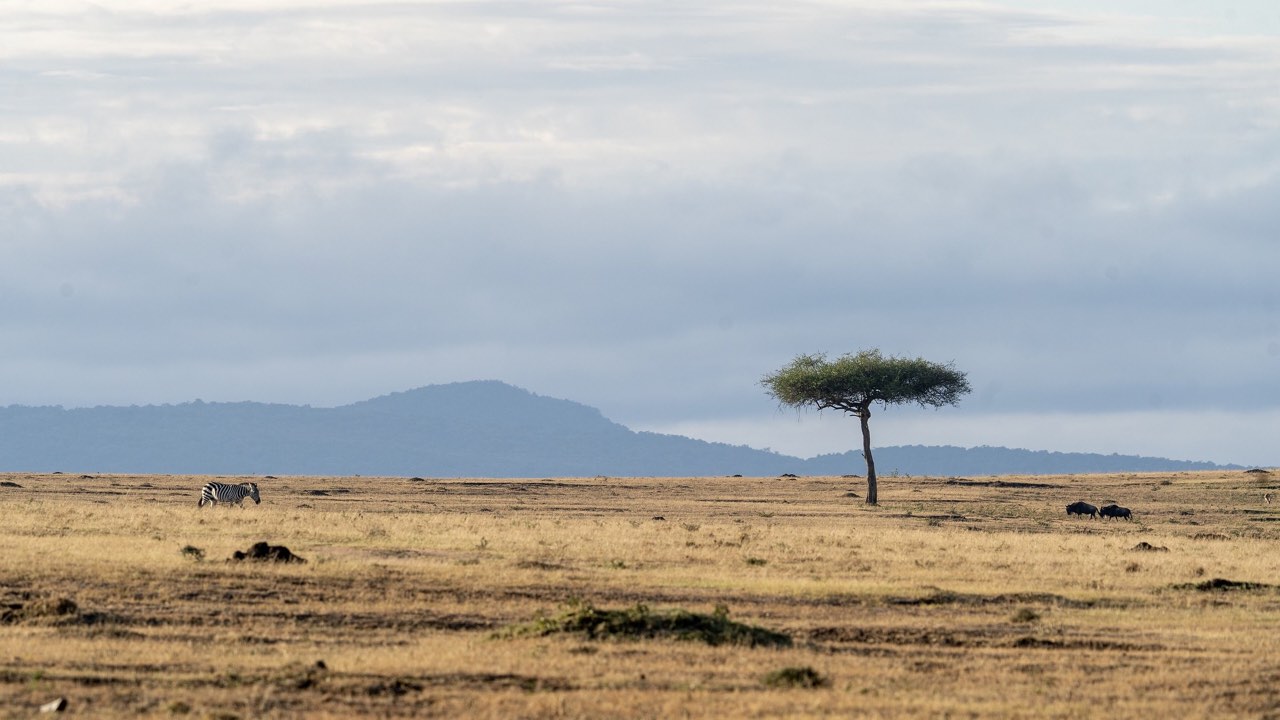
A lone acacia on the plains of the Masai Mara at first light

Siku mojaItineraries for Masai Mara, Kenya

Masai Mara itinerary: two to five days, hour by hour

A Masai Mara itinerary is measured in hours on the ground, not days on the calendar. By road the drive from Nairobi takes about 5 to 6 hours by road each way, as Mara North Conservancy states it, so two nights give one full day of game drives plus an afternoon and a morning, and three nights give two full days. Flying from Wilson takes about 45 minutes and gives back almost a full day. Your ticket runs 6:00 to 18:00 and checkout is by 10:00, so a last-morning drive needs a fresh ticket.

Photo: Kandukuru Nagarjun / Wikimedia Commons, CC BY 2.0

Some links on this page are affiliate links: the guide earns a commission when you book through them. The partner sets the price; the guide adds no fee.

Three nights by road, or two nights by air on an early flight, is the shortest stay that gives two full days of game drives. One night is a taste: by road it is two half days and most of the trip is the drive. Five days and four nights leave room for a balloon morning, a conservancy or a rest. How to go on a Masai Mara safari compares group, private and fly-in trips; the safari cost page turns any length into a budget.

about 21 hoursTwo nights by road, leaving Nairobi at 7:00

about 27 hoursTwo nights by air, Safarilink 05 in, 02 out

Hours on the ground inside the ticket window, as the ledger below counts them.

MudaHow many days in the Masai Mara

The hours ledger: one to four nights, road or air

Every row is a stay, every strip a day from 6:00 to 19:00. The warm part is the time you can spend in the reserve on that day's ticket; the rest is the road, the flight or the run back to camp. Set the hour you leave Nairobi, the flights and the last morning, and every strip redraws.

Shown: leaving Nairobi at 7:00 by road; Safarilink 05, 7:15 to 8:15 in and Safarilink 02, 11:00 to 12:20 out; a drive on the last morning. The departure time from Nairobi is yours to set; no timetable fixes it.

  • On the road
  • The slower end of the drive
  • In the air
  • In the reserve, ticket 6:00 to 18:00
  • Last morning, fresh ticket
  • Back in camp by 19:00
  • In camp, no drive

Two days, one night

Ticket days: 1 or 2

Park fees per non-resident adult: USD 100 to 200 January to June, USD 200 to 400 July to December

By road

  1. Day 113:00 to 18:00, half day
  2. Day 26:00 to 10:00, half day, fresh ticket

about 2 half days of drives

By scheduled flight

  1. Day 18:15 to 18:00, full day
  2. Day 26:00 to 11:00, half day, fresh ticket

about 1 full day and 1 half day of drives

Three days, two nights

Ticket days: 2 or 3

Park fees per non-resident adult: USD 200 to 300 January to June, USD 400 to 600 July to December

By road

  1. Day 113:00 to 18:00, half day
  2. Day 26:00 to 18:00, full day
  3. Day 36:00 to 10:00, half day, fresh ticket

about 1 full day and 2 half days of drives

By scheduled flight

  1. Day 18:15 to 18:00, full day
  2. Day 26:00 to 18:00, full day
  3. Day 36:00 to 11:00, half day, fresh ticket

about 2 full days and 1 half day of drives

Four days, three nights

Ticket days: 3 or 4

Park fees per non-resident adult: USD 300 to 400 January to June, USD 600 to 800 July to December

By road

  1. Day 113:00 to 18:00, half day
  2. Day 26:00 to 18:00, full day
  3. Day 36:00 to 18:00, full day
  4. Day 46:00 to 10:00, half day, fresh ticket

about 2 full days and 2 half days of drives

By scheduled flight

  1. Day 18:15 to 18:00, full day
  2. Day 26:00 to 18:00, full day
  3. Day 36:00 to 18:00, full day
  4. Day 46:00 to 11:00, half day, fresh ticket

about 3 full days and 1 half day of drives

Five days, four nights

Ticket days: 4 or 5

Park fees per non-resident adult: USD 400 to 500 January to June, USD 800 to 1,000 July to December

By road

  1. Day 113:00 to 18:00, half day
  2. Day 26:00 to 18:00, full day
  3. Day 36:00 to 18:00, full day
  4. Day 46:00 to 18:00, full day
  5. Day 56:00 to 10:00, half day, fresh ticket

about 3 full days and 2 half days of drives

By scheduled flight

  1. Day 18:15 to 18:00, full day
  2. Day 26:00 to 18:00, full day
  3. Day 36:00 to 18:00, full day
  4. Day 46:00 to 18:00, full day
  5. Day 56:00 to 11:00, half day, fresh ticket

about 4 full days and 1 half day of drives

A full day is at least nine of the twelve ticket hours on the ground, a half day at least four. By road the hours count from the slower end of the drive Mara North Conservancy states; by air from the landing time the timetable prints at the first Mara airstrip, before any transfer to camp. The higher ticket count is the one with a last-morning drive.

SaaThe clock inside the reserve

The rules that set every day

The Mara Conservancy's ticket portal says a day ticket is valid 6:00 to 18:00, whatever time you buy it, and does not carry over the night. Overnight guests check out by 10:00, and a morning game drive on the checkout day needs a fresh full-day ticket. That is why the last strip in each row of the ledger is a different color: the morning is yours only if you pay for it.

The gates follow the reserve's management plan: no entry after 18:30, and by 19:00 you are out of the reserve or back at your camp. In the Mara Triangle the gates open at 6:00 and close at 19:00 (Mara Conservancy).

After dark the reserve stays shut to vehicles: the plan bans night game drives and walking safaris on the Narok side and in the Triangle alike. Bush dinners are allowed only at approved sites, with guests back by 21:00. Night drives exist only in some conservancies: Mara North allows them in set areas, with vehicles back in camp by 22:00 (Mara North).

A day in the Masai Mara by the rules A time line from 5:00 to 23:00. The ticket window runs from 6:00 to 18:00, balloons may take off between 6:00 and 7:00, checkout is by 10:00, entry closes at 18:30, guests are in camp by 19:00, bush dinners end by 21:00 and night drives in Mara North Conservancy end by 22:00. 6:009:0012:0015:0018:0021:00 ticket 6:00 to 18:00 Balloons 6:00 to 7:00 Checkout by 10:00 Last entry 18:30 In camp, Triangle gates shut 19:00 Bush dinner guests back 21:00 Mara North night drives back 22:00 Reserve and Triangle no night drives, no walks
The reserve's day by its own rules. On a phone, swipe the line sideways for the afternoon and evening. The conservancy mark is Mara North's; other conservancies set their own hours.
An acacia against a pale dawn sky over the Mara plains
A ticket bought at noon still opens at 6:00: the morning before you arrive is already spent. Photo: Kandukuru Nagarjun / Wikimedia Commons, CC BY 2.0
An acacia silhouetted against a red evening sky
Between 18:00 and 19:00 the vehicles head home. Photo: Daniel Case / Wikimedia Commons, CC BY-SA 4.0

Safari njemaGetting there and back

The first and last day decide the trip

By road

Mara North Conservancy puts the drive from Nairobi at about 5 to 6 hours by road: about 2 to 2.5 hours by road to Narok, then about 3 hours by road to the conservancy (how to get there). Mara Siana Conservancy, on the eastern side, gives about 240 km (149 mi) by road, about 3 to 4 hours by road (Mara Siana). Both are times without stops.

No timetable fixes when a road safari leaves Nairobi; your operator does. The ledger opens on a 7:00 start. On that start the stated drive brings you to the reserve at 12:00 to 13:00, which leaves an afternoon on a ticket that runs until 18:00. Leave at 9:00 instead and day one shrinks to 15:00 to 18:00. On the last day you leave at checkout, 10:00, and reach Nairobi at 15:00 to 16:00. Nairobi to Masai Mara has the road, the gates and self-driving.

A dirt track running across open grassland in the Masai Mara
The last stretch to the gates is dirt. By road, day one is mostly this. Photo: Daniel Case / Wikimedia Commons, CC BY-SA 4.0

By scheduled flight

AirKenya and Governors' Aviation state the flight from Wilson Airport at about 45 minutes (AirKenya, Governors' Aviation). Safarilink leaves Wilson at 7:15, 10:00 and 14:15, AirKenya at 7:30, 10:30 and 14:15 (Safarilink 2026, AirKenya 2026). Safarilink's flight 05 lands at 8:15, so the first ticket day starts almost whole.

The return works the same way: Safarilink's flight 02 leaves the Mara at 11:00 and AirKenya's last flight at 15:10, so a last-morning drive on a fresh ticket fits before either. Times are to or from the first Mara airstrip and vary with the routing over several strips. Safarilink's 8:30 flight back runs in high seasons only.

Landing at JKIA the same morning, allow for the transfer: Safarilink puts JKIA to Wilson at about 25 minutes by road, at least 1 hour by road in the morning and evening rush hours (Safarilink FAQs). AirKenya flies only from Wilson. Both airlines allow 15 kg (33 lb) per person, hand baggage included, in soft bags (AirKenya baggage). Fares and airstrips are on the flights page.

A small propeller aircraft on a grass airstrip in the bush
The flight trades money for hours: the morning of day one moves from the road to the reserve. Photo: Ninara / Wikimedia Commons, CC BY 2.0
All scheduled flights between Wilson and the Mara, 2026
Departure to the printed arrival at or from the first Mara airstrip.Safarilink and AirKenya 2026 timetables, valid to 31 December 2026.
FlightTo the MaraFlightBack to Wilson
Safarilink 057:15 to 8:15AirKenya 8528:05 to 9:35
AirKenya 8517:30 to 8:00Safarilink 06, high seasons only8:30 to 9:34
Safarilink 0110:00 to 11:00Safarilink 0211:00 to 12:20
AirKenya 85310:30 to 11:10AirKenya 85411:15 to 13:00
Safarilink 0314:15 to 15:15AirKenya 95215:10 to 16:30
AirKenya 95114:15 to 15:00Safarilink 0415:15 to 16:15

Safarilink's flight 01 can route via Naivasha (Loldia), and its early and afternoon flights need at least four passengers.

MpangoSample itineraries

Four Masai Mara itineraries, day by day

Each plan is written by road with a 7:00 start, the ledger's default; the line under each heading gives the same nights by air. Prices are what each seller listed on 12 November 2026, per person.

Two days, one night

By road: about 2 half days of drives. By air: about 1 full day and 1 half day of drives.

  1. Day 1. Leave Nairobi; at the reserve at 12:00 to 13:00. An afternoon drive until the ticket ends at 18:00, in camp by 19:00.
  2. Day 2. A morning drive from 6:00 on a fresh ticket, checkout by 10:00, then the road back, in Nairobi at 15:00 to 16:00.

Is two days enough? For the drive, barely: you spend about as long on the road as in the reserve. It suits a traveler with one free weekend in Nairobi, or a flight in and out, where the same night gives a near-full first day. Park fees for two days are USD 100 to 200 per adult from January to June and USD 200 to 400 from July to December.

Three days, two nights

By road: about 1 full day and 2 half days of drives. By air: about 2 full days and 1 half day of drives.

  1. Day 1. Nairobi to the reserve, an afternoon drive, back in camp by 19:00.
  2. Day 2. The one full day: the whole ticket, 6:00 to 18:00. Ask your operator whether the day is one long drive with a packed lunch or two drives with a break in camp.
  3. Day 3. A morning drive on a fresh ticket, checkout by 10:00, the road back.

The ledger shows this plan most plainly: one full day, framed by two half days. It is 2 or 3 ticket days, USD 200 to 300 per adult in the first half of the year, USD 400 to 600 in the second.

A safari vehicle under an acacia on the open plains
The full day is the one day of the trip with no road and no flight in it. Photo: Daniel Case / Wikimedia Commons, CC BY-SA 4.0

Four days, three nights

By road: about 2 full days and 2 half days of drives. By air: about 3 full days and 1 half day of drives.

  1. Day 1. Nairobi to the reserve, an afternoon drive.
  2. Day 2. A full day on the plains.
  3. Day 3. A balloon morning, or a second full day. Governors' Balloon Safaris launches between 6:15 and 6:45, with check-in about half an hour earlier, and has guests back at Little Governors' Camp by about 11:00; the reserve allows take-off only between 6:00 and 7:00 (flight terms). A game drive after the flight needs that day's ticket.
  4. Day 4. A morning drive on a fresh ticket and the road back.

The second full day is where a trip stops being a schedule: a slow morning with one sighting, an afternoon on a different side of the reserve. It is 3 or 4 ticket days, USD 300 to 400 per adult from January to June, USD 600 to 800 from July to December. Balloon prices are on the balloon page.

Hot-air balloons low over the plains with a ridge behind
Balloons lift in the first hour of the ticket day and are down by mid-morning. Photo: Ninara / Wikimedia Commons, CC BY 2.0
A cheetah sitting upright in short grass
A second full day buys patience: time to wait at one sighting instead of moving on. Photo: Thomas Fuhrmann / Wikimedia Commons, CC BY-SA 4.0

Five days, four nights

By road: about 3 full days and 2 half days of drives. By air: about 4 full days and 1 half day of drives.

  1. Day 1. Nairobi to the reserve, an afternoon drive.
  2. Days 2 and 3. Two full days, one of them with a balloon morning if you want one.
  3. Day 4. A change of pace. Move to a camp in a conservancy for the last nights, where walks and night drives are allowed (back by 22:00 in Mara North), or spend part of the day on a Maasai village visit.
  4. Day 5. A morning drive on a fresh ticket, or none if your last nights are in a conservancy, and the road back.

Five days is the length at which the clock stops pressing. Park fees reach USD 800 to 1,000 per adult from July to December and USD 400 to 500 from January to June, so splitting the stay with a conservancy can change the sum: the reserve ticket is charged per day inside the reserve, so ask your camp how it bills the days you do not enter, and the conservancy's own fee is quoted by its camps. Where to stay sorts the areas; for Amboseli or Lake Nakuru on the same trip, see the Kenya safari itinerary.

Listings come from GetYourGuide, Viator and TourRadar; the price is the seller's own, per person, and the fee words are the listing's. Every safari of every length, with its total for your budget, is in the budget finder; the entrance fee page counts ticket days for exact dates.

Wildebeest spread across the grass plains of the Masai Mara

Photo: Wajahatmr / Wikimedia Commons, CC BY-SA 3.0

Mto MaraWhen to add a night

The herds keep no timetable; a spare day lets you wait for them.

Mto MaraWhen to add a night

Three reasons to stay one night longer

The herds

In the Mara Conservancy's monthly reports for 2001 to 2026, large herds were in the Mara at some point in July in 19 of 24 seasons, in August in 26 of 26 seasons, in September in 25 of 25 seasons and in October in 20 of 26 seasons (monthly reports). The first river crossing of a season has come anywhere from June (2010) to October (2001). No day or week can be booked for a crossing, so a stay built around one needs slack: a third full day is the cheapest insurance. The migration page has the season-by-season record, and the best time to visit weighs it against rain and fees.

If you stay in a conservancy, ask where the herds pass: Mara Naboisho Conservancy says the migration does not pass through it, and the herds move mainly through the neighboring reserve (Naboisho).

The rain

At Keekorok, April brings 160 mm on average over 10 days of rain, against 60 mm over 4 days in August; November has 95 mm (CHIRPS, 1991 to 2020). A drive cut short by a storm costs you more on a two-night stay than on a four-night one. The weather page has every month.

The cold start

The ticket opens at 6:00, and early drives start in the cool: in Mara North the nights average 12 °C (54 °F) in July, with days of 24 °C (75 °F). With more nights, you can skip a dawn drive and still have your full days.

  • A full day

    One night more, by road

    Every night between the first and the last day is a whole ticket day: 6:00 to 18:00 with no road in it.

  • USD 200

    And one ticket day more

    Per non-resident adult per day from 1 July to 31 December; USD 100 from 1 January to 30 June (rate card).

  • about 45 minutes

    Or fly instead

    The stated flight time from Wilson, against about 5 to 6 hours by road.

MaswaliItinerary questions

Questions before you set the nights

The hours behind every answer are in the ledger. Safety in the Masai Mara has the travel advisories with their dates; the reserve page explains the Narok side and the Triangle. The entrance fee page explains the ticket rule people call the 12-hour rule.

How many days do you need in the Masai Mara?

Three days and two nights by road give about 1 full day and 2 half days of drives, because the drive takes about 5 to 6 hours by road each way. Four days and three nights give about 2 full days and 2 half days of drives. Flying in from Wilson adds almost a full day to the same nights. For two full days of game drives, plan three nights by road or two by air.

Is two days enough for the Masai Mara?

Two days and one night give about 2 half days of drives by road, with as much time on the road as in the reserve. By scheduled flight the same night gives about 1 full day and 1 half day of drives. It works as a short add-on to a Nairobi stay; for a first safari, one more night doubles the time on the plains.

What is the best month for a Masai Mara itinerary?

For the herds, the Mara Conservancy's reports for 2001 to 2026 record large herds in the Mara at some point in August in 26 of 26 seasons and in September in 25 of 25 seasons, but no week is certain. From January to June the park fee is half, USD 100 against USD 200. The best time to visit weighs both against the rain.

Should you drive or fly to the Masai Mara?

By road the drive takes about 5 to 6 hours by road, as Mara North Conservancy states it, and costs most of the first and last day. The flight from Wilson takes about 45 minutes, so on a two-night stay you get about 2 full days and 1 half day of drives instead of about 1 full day and 2 half days of drives. Flying costs more and limits you to 15 kg of soft baggage.

Sources

  1. Governors' Balloon Safaris states that clients staying outside the Masai Mara reserve who enter only to balloon and leave after breakfast no longer need a park ticket; anyone taking a game drive after the flight needs one. Governors Balloon Safaris Ltd: Rack Rates 1st January 2026 to 31st December 2026 (rates worksheet dated 25 March 2025), 2025-03-25.
  2. Governors' Balloon Safaris: the operator states departure is at sunrise, between 6:15 and 6:45 am, with check-in about 30 minutes earlier for the safety briefing; late passengers who miss the briefing are refused. Governors Balloon Safaris Ltd: Flight Terms & Conditions, valid from 26th March 2025, 2025-09-12.
  3. Governors' Balloon Safaris: the operator states guests are back at Little Governors' Camp by about 11 am, earlier if departing the Mara that morning. Governors' Balloon Safaris: FAQs.
  4. Mara North Conservancy allows night game drives only in designated areas, with red filters on spotlights, and vehicles must be back in camp by 10.00 pm. Mara North Conservancy: Game Drive Etiquette.
  5. Mara North Conservancy states the drive from Nairobi takes about 5-6 hours (about 280 km to the Mara); Nairobi to Narok about 2-2.5 hours and about 3 more hours to the conservancy. Mara North Conservancy: How to Get There.
  6. Mara Naboisho Conservancy states the Great Migration does not pass through Naboisho; the herds move mainly through the neighbouring reserve, though wildlife movement in and out stays high year-round. Mara Naboisho Conservancy: Get in Touch (FAQs).
  7. AirKenya baggage: maximum 15 kg (33 lb) per passenger on all services in soft-sided bags, including carry-on items up to 5 kg; guideline checked-bag size 60 x 45 x 33 cm, hand luggage 30 x 53 x 23 cm. AirKenya: Baggage Policy (web page and PDF 'Updated Baggage Policy').
  8. AirKenya states flight time Wilson to Maasai Mara is about 45 minutes (Amboseli 35, Arusha 55, Nanyuki 40, Lewa 45, Loisaba and Samburu 55, Meru 60 minutes). AirKenya: Frequently Asked Questions.
  9. Governors' Aviation states its Wilson-Masai Mara flights take approximately 45 minutes, flown with two Cessna Grand Caravans; on days its aircraft are not flying, confirmed passengers may be rebooked on Safarilink or AirKenya. Governors' Camp: Governors' Aviation page.
  10. Safarilink states the drive between JKIA and Wilson Airport takes about 25 minutes, but a minimum of 1 hour should be allowed in the morning and evening rush hours. Safarilink: FAQs.
  11. AirKenya flies only from its private terminal at Wilson Airport (WIL), about 15 minutes from Nairobi city center; it has no scheduled flights from JKIA. AirKenya: Frequently Asked Questions.
  12. Safarilink 2026: baggage allowance is strictly 15 kg per person on safari routes (20 kg to Diani, Entebbe, Lamu, Malindi, Mombasa, Kisumu and Zanzibar), inclusive of hand baggage, in soft bags; infants without a seat get no allowance; one piece per person max 60 x 45 x 30 cm. Safarilink: Timetable and Fares 2026, 1st Edition (valid up to 31 December 2026).
  13. Safarilink flight 05 departs Nairobi Wilson for the Masai Mara airstrips at 7:15 and arrives 8:15, daily, subject to a minimum of 4 passengers throughout the year (2026 timetable, valid to 31 December 2026); times and airstrips vary daily with the aircraft routing. Safarilink: Timetable and Fares 2026, 1st Edition (valid up to 31 December 2026).
  14. Safarilink flight 01 departs Nairobi Wilson for the Masai Mara airstrips at 10:00 and arrives at 11:00, daily, per the 2026 timetable (valid to 31 December 2026); flight 01 can route via Naivasha (Loldia), and times and airstrips vary daily with the aircraft routing. Safarilink: Timetable and Fares 2026, 1st Edition (valid up to 31 December 2026).
  15. Safarilink flight 06 departs the Masai Mara airstrips for Nairobi Wilson at 8:30 and arrives 9:34, in high seasons only (note b), subject to a minimum of 4 passengers (note e), per the 2026 timetable. Safarilink: Timetable and Fares 2026, 1st Edition (valid up to 31 December 2026).
  16. Safarilink flight 02 departs the Masai Mara airstrips for Nairobi Wilson at 11:00 and arrives at 12:20, daily, per the 2026 timetable (valid to 31 December 2026); times and airstrips vary daily with the aircraft routing, subject to a minimum of 4 passengers throughout the year (timetable note e). Safarilink: Timetable and Fares 2026, 1st Edition (valid up to 31 December 2026).
  17. AirKenya flight P2 851 Wilson to Masai Mara: departs 7:30, arrives 8:00, daily, valid 21 December 2025 to 31 December 2026; Mara times show the first stop and vary with routing over multiple airstrips. AirKenya: Flight Schedule 2026 (valid from 21 December 2025 to 31 December 2026).
  18. AirKenya flight P2 952 Masai Mara to Wilson: departs 15:10, arrives 16:30, daily, valid 21 December 2025 to 31 December 2026; Mara times show the first stop and vary with routing over multiple airstrips. AirKenya: Flight Schedule 2026 (valid from 21 December 2025 to 31 December 2026).
  19. The reserve management plan allows no new or expanded balloon concessions, at most five balloons per concession and 20 passengers per balloon, take-off only between 6:00 and 7:00, no passenger transfer vehicles moving in the reserve before 4:30, and bush breakfast sites cleared by 10:30. Narok County: Maasai Mara National Reserve Management Plan 2023-2032 (Final, February 2023).
  20. The Mara Conservancy / KAPS ticket rate card, co-branded with Narok County Government, charges a non-resident adult the same park fee whether accommodated inside or outside the park: USD 200 per person per day from July to December. Mara Conservancy / KAPS: Park Fees Itemization rate card (Nature Paas ticket portal).
  21. The same co-branded rate card charges a non-resident adult USD 100 per person per day from January to June, whether accommodated inside or outside the park; non-resident children aged 9 to 17 and students in organized groups pay USD 50 per person per day in both blocks. Mara Conservancy / KAPS: Park Fees Itemization rate card (Nature Paas ticket portal).
  22. The Mara Conservancy ticket portal states that day tickets are valid 12 hours (6:00 to 18:00) and expire automatically at 6:00 pm, whatever time they are bought. Mara Conservancy / KAPS: Nature Paas ticket portal, 'Know Before You Go'.
  23. The Mara Conservancy ticket portal states that overnight guests must check out by 10:00 am, and that a morning game drive on the checkout day needs a fresh full-day ticket. Mara Conservancy / KAPS: Nature Paas ticket portal, 'Know Before You Go'.
  24. The Mara Conservancy ticket portal gives park gate hours as 6:00 to 18:00 on its home page but 6:00 to 18:30 for entry and exit in its park rules. Mara Conservancy / KAPS: Nature Paas ticket portal, home page and /rules.
  25. Under the reserve management plan visitor rules, visitors may not enter the Maasai Mara National Reserve after 18:30 and must leave by 19:00 if staying outside or be back at their accommodation by 19:00 if staying inside. Narok County: Maasai Mara National Reserve Management Plan 2023-2032 (Final, February 2023).
  26. The Maasai Mara National Reserve Management Plan 2023-2032 bans night game drives throughout the reserve (Narok side and Mara Triangle). Narok County: Maasai Mara National Reserve Management Plan 2023-2032 (Final, February 2023).
  27. The Maasai Mara National Reserve Management Plan 2023-2032 bans walking, horseback and bicycle safaris in the reserve. Narok County: Maasai Mara National Reserve Management Plan 2023-2032 (Final, February 2023).
  28. The reserve management plan sets bush dinners only at management-approved sites in the High Use and Low Use zones, with guests back at their accommodation by 9:00 pm; bush dinners are not allowed in the Mara River Zone. Narok County: Maasai Mara National Reserve Management Plan 2023-2032 (Final, February 2023).
  29. Mara Triangle gates open at 6:00 and close at 19:00 every day, and no vehicle may enter after 18:30. Mara Conservancy: Experience Mara Triangle.
  30. Mara Triangle rules require visitors to leave the park or be in their camp or lodge by 7:00 pm. Mara Conservancy: Park Rules page (rules sheet and park rule violation fee chart).
  31. Masai Mara safaris by budget. GetYourGuide, Viator and TourRadar listings of Masai Mara safaris, listed price per person read 12 November 2026; park fees from the Mara Conservancy and Narok County Government rate card
  32. Travel times and distances. Drive times as stated by Mara North Conservancy, Mara Siana Conservancy, the Mara Conservancy, Safarilink and AirKenya; road distances from KeNHA, Narok County, Kenya Wildlife Service and Mara Siana Conservancy; flight times from the 2026 timetables of Safarilink, AirKenya, Governors' Aviation and Mombasa Air Safari
  33. Hours on the ground by plan, and the Nairobi half-day planner. Computed from the Mara Conservancy ticket portal (ticket 6:00 to 18:00, checkout 10:00), the reserve management plan (no entry after 18:30, in camp by 19:00), the drive time Mara North Conservancy states, the Safarilink and AirKenya 2026 timetables, the check-in times Safarilink, AirKenya and Governors' Aviation state at Wilson and the transfer times Safarilink and AirKenya state; the departure time from Nairobi is a scenario
  34. Unit conversions. Metric figures with US equivalents (1 km = 0.621371 mi, 1 m = 3.28084 ft, 1 kg = 2.20462 lb, 1 ft = 0.3048 m, 1 acre = 0.404686 ha, °F = °C × 9/5 + 32)
  35. Masai Mara park fees. Mara Conservancy and Narok County Government rate card, non-resident adult per day; ticket valid 6:00 to 18:00
  36. Migration records. Mara Conservancy monthly reports (Mara Triangle), seasons 2001 to 2026, audited 12 November 2026: one definition per event (first small groups, first large herds, first Mara River crossing, departure of the large herds), counted by season
  37. Climate 1991 to 2020. Rain: CHIRPS v2.0 daily rainfall, UCSB Climate Hazards Center, 1991 to 2020 (satellite and gauge grid); temperature: NASA POWER daily point data (MERRA-2 reanalysis), 1991 to 2020; monthly means and the 8-of-10-years range computed from the daily series